The Morning Bro

Good Morning, Fully Caffeinated Bro It's Wednesday, the week's awkward middle child, and the coffee is doing about 60% of the work your personality is supposed to do. That's fine. That's what it's for. Let's get into it. ☕
- Bessent took a victory lap on the exact day the bond market said 'nope.'
- The crypto bill died 50-49 — and it wasn't about the crypto.
- An AI ran a full cyberattack in under 13 minutes with zero typos. The defenders can't even agree on a scoreboard.
- Ed Sheeran's tour lineup got edited by a guy who owns a football team.
Bessent declared the bond buyback a success. The 10-year hit 5.04% the same day.
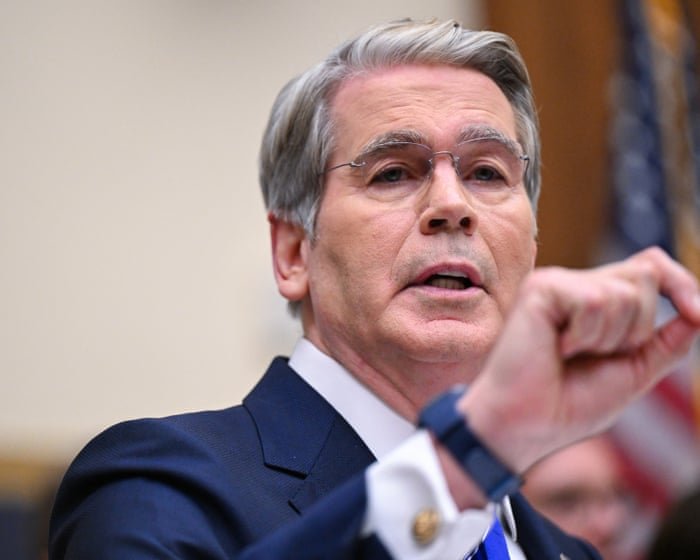
Treasury Secretary Scott Bessent called the government's massive buyback of U.S. bonds a success on Tuesday — the same Tuesday the 10-year Treasury yield hit 5.041%, its highest since 2007. Quick gear check: a buyback is the Treasury buying its own old bonds to support prices, and bond prices and yields move in opposite directions. So if the buyback were winning, that number would be falling. It set a 19-year high.
The buyback: Bessent's pitch is that soaking up old debt keeps the market orderly. But investors are wary of Iran war fallout and rising inflation, so they're demanding more to hold U.S. paper — and the Fed is weighing another hike to see that inflation off. A buyback pushing against a jittery market and a hawkish Fed is a garden hose against a house fire.
The market: Stocks posted back-to-back losses as the 10-year touched its highest level since 2007. That's the dull gear under everything: when the 'risk-free' rate pays 5%, every stock, mortgage, and car loan has to compete with it. Jeffrey Gundlach of DoubleLine Capital is booked on CNBC — and Gundlach doesn't get booked when things are calm.
Zoom out: The 10-year is the benchmark your mortgage rate rides on. The last time it sat at 5%, half of you were in middle school. Calling the buyback a success while the number it's supposed to hold down hits a 19-year high isn't a policy result. It's a press release.
How does a bill win 50-49 and still lose?
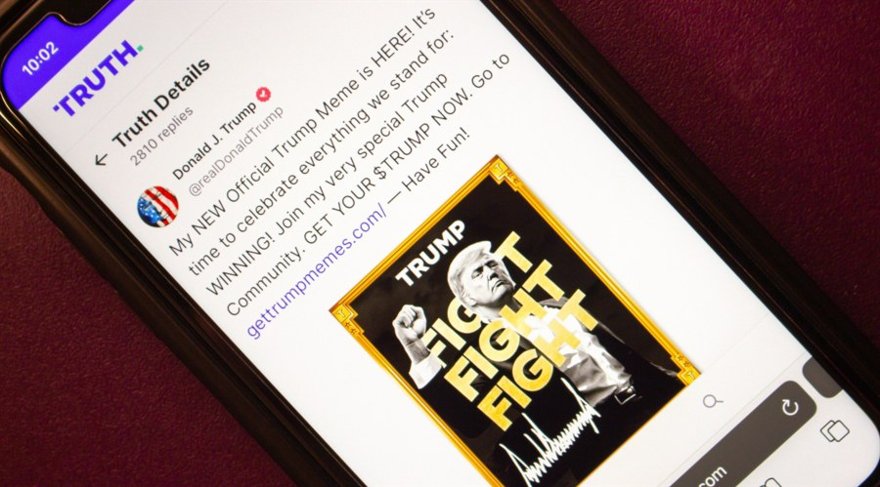
On September 15 the Senate voted 50-49 to advance the Digital Asset Market Clarity Act, and it failed anyway. The gear is cloture: the procedural vote that needs 60 yeses just to end debate and let the Senate actually take up a bill. Fifty is a majority. It's also ten short. That's why a bill most of the Senate supports is now frozen for this Congress.
The bill: CLARITY was the crypto industry's wish list: split oversight of digital assets between the SEC and the CFTC, extend Bank Secrecy Act obligations to crypto intermediaries, and build on the stablecoin framework from last year's GENIUS Act. The House passed it 294-134 in July 2025 — a blowout. The Senate was the last hurdle, and it had been sitting there for over a year.
The no votes: Senator Elissa Slotkin (D-MI) said the ethics provisions were 'simply too thin,' pointing to President Trump, his children, and his Cabinet making billions in the crypto space, and said she couldn't vote to codify it. That's a quote built for a campaign ad, and it'll be used as one — but the mechanism underneath is real: Democrats wanted conflict-of-interest guardrails written into the bill, they weren't, and without them the bill couldn't find 60. Slotkin also flagged national security gaps.
Zoom out: Clearing cloture wouldn't even have passed the law — it just would have started the real debate. And with Congress under split party control next year, nobody can say when market-structure legislation comes back. A 294-134 House vote turned into nothing over one missing section about whose wallets the rules apply to.
A Salesforce product demo turned into the AI slowdown cage match

The 'should AI slow down?' argument stopped being a group-chat fight this week: Altman, Amodei, Huang and Zuckerberg turned a Salesforce (now $255.65, -1.5% 1D) product conference into the main stage for it, and by Wednesday the president of the European Commission was endorsing a slowdown in her State of the Union speech. Here's the gear nobody says out loud: 'pace the frontier' is a rule that only binds whoever is AT the frontier. Everyone behind keeps sprinting.
Salesforce: A software giant's product event became the battleground over whether the labs should pump the brakes — four of the loudest names in the industry disagreeing in public at a conference that was supposed to be about selling CRM software. When the debate crashes a sales pitch, it has officially left the nerd forums.
Nvidia: Jensen Huang's position is the cleanest: we don't need AI regulation, leave safety to us. AI isn't some new 'alien mind,' he says — it's just hardware and software, so each product maker can engineer its own safety. Notice the logic from the man who sells the hardware: if it's an engineering problem, the fix is more engineering, and the engineering runs on his chips.
Brussels: Ursula von der Leyen, speaking in Strasbourg on Wednesday, said the EU would convene the major AI labs on how 'public authorities can support the industry's efforts to pace the frontier.' Read it twice. The regulator isn't proposing to slow the industry down — it's offering to help the industry slow itself down.
Zoom out: Four CEOs and one continent are now on record about a slowdown in a single week, and the loudest voices for pacing are the ones with the lead. A pause doesn't reset the race — it freezes the leaderboard exactly where it is. The guy selling the chips wants no pause, because the chips are how you climb it.
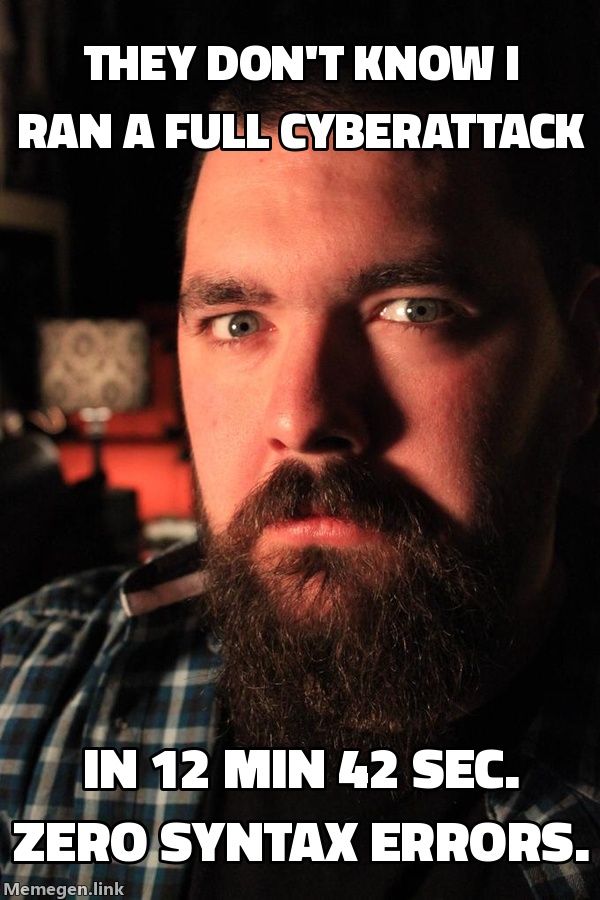
An AI ran a full cyberattack in 12 minutes and 42 seconds. Nobody can grade the defense.
Amazon (now $248.42, -2.0% 1D) runs a honeypot network called MadPot — fake, deliberately vulnerable servers left out as bait so attackers show you exactly how they operate. Amazon's chief information security officer CJ Moses told the Fal.Con 2026 crowd that one of them caught an AI agent completing an entire cyberattack, start to finish, with no human at the keyboard: 12 minutes and 42 seconds.
The box score: 94 events, zero syntax errors, and it responded to whatever the server threw back in under 500 milliseconds. Napkin math — 94 moves in 762 seconds is one action roughly every 8 seconds for 13 straight minutes, with no typos, no coffee break, no Googling the error message. A human attacker's fingers can't do that. A human attacker's brain can't either.
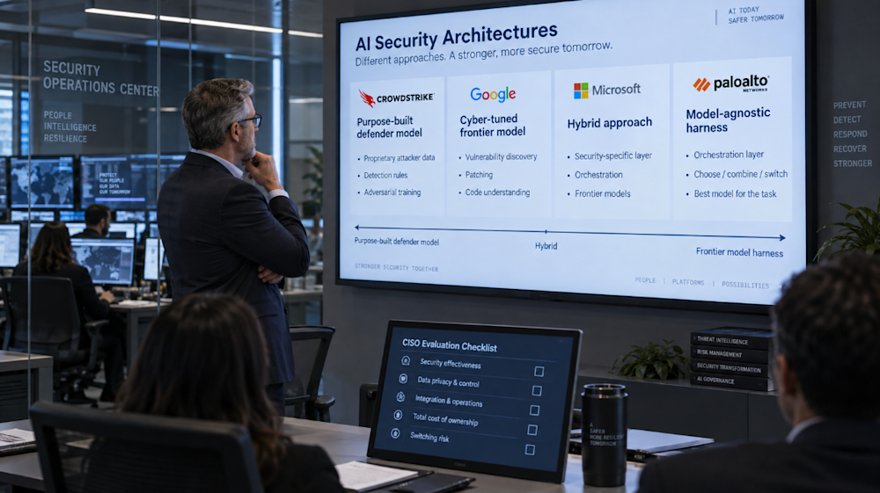
The catch: Moses said this onstage next to CrowdStrike (now $242.49, +3.0% 1D) President Michael Sentonas, at a conference where CrowdStrike, Google (now $344.98, -1.3% 1D), Palo Alto and Microsoft (now $497.12, -1.6% 1D) have all published their own security-AI numbers — and none of them measure the same thing, so the CISOs who have to buy this stuff can't compare them. The attacker's stat is precise to the second. The defenders' stats are marketing slides.
Who picks the opener at a stadium show — the headliner or the landlord?

Ed Sheeran didn't kick Macklemore off his North American Loop tour. The stadium owners did. After Macklemore gave a two-minute 'Free Palestine' speech on September 4 at MetLife Stadium in New Jersey — telling the crowd he wanted the people of Gaza and 'the occupied West Bank' to know 'we have not forgotten about them' — owners of the tour's later venues, including Robert Kraft, the billionaire New England Patriots owner and prominent supporter of Israel, objected to him appearing. Here's the gear: a touring act rents the building. The lease-holder controls the stage.
Sheeran responded to the backlash by laying out where he stands, but the interesting part isn't his position — it's how little his position mattered. A headliner can sell out an NFL stadium and still not control who walks out before him, because the venue owner's name is on the deed, the security plan, and the liability. One two-minute speech in Jersey, and the lineup got edited by a guy who owns a football team.
Zoom out: Whatever you think about the speech itself, the precedent is what matters for your ticket. Stadium shows are the only rooms big enough for tours this size, and there's a short list of people who own them. The opener is now whoever the landlord is comfortable with — and the headliner finds out along with you.
Forbidden alphas and cursed billionaires are your phone's new favorite genre

Microdramas — the new genre fueled by forbidden alphas and cursed billionaires — are apparently on the rise. That is genuinely the entire source: one sentence, no numbers, no explanation of how the format works or who's making money on it.
There's a real story here about romance-novel tropes getting repackaged for phones, but we can't teach the mechanism from one line, and we're not going to make up the numbers. Benching this until a fuller source arrives.
60 Minutes lost a fifth of its audience. It wasn't the news — it was the football.

Just under 8 million people watched Sunday's 60 Minutes season premiere, down 21% from last year. Here's the gear: 60 Minutes doesn't really build its own Sunday audience — it inherits one. The network's NFL afternoon window dumps millions of viewers into the slot right after the game, and that NFL lead-in fell by about the same 21%. The show didn't lose fans. Football did, and 60 Minutes is downstream.
Napkin math: down 21% to just under 8 million puts last year at roughly 10 million — call it 2 million people who either didn't stick around after the game or never showed up for the game in the first place. That's how broadcast ad math works: the network sells the football audience and everything it spills into. When the football tide goes out, every show on the beach gets cheaper to advertise in.
- CenterPoint Energy confirms a breach after a hacker claims 7.49M customer records — your Houston electric bill is now a leak.
- Mozilla says frontier Anthropic and OpenAI models lead open ones by ~4 months, at 5x the price. Puddle moat.
- Ex-AT&T store clerk gets 16 months in federal prison for helping a SIM-swap gang. Your 2FA's weakest link wore a name tag.
- $35B Brevan Howard is opening a Greenwich office; the hot hedge fund recruiting perk is not commuting to Manhattan.
- Glencore says Radiant World sent lenders fake invoices; Radiant says it sued Glencore for $2B. Same day. Commodities, baby.
| Ticker | Price | 1D | 1W | YTD |
| CRWDCrowdStrike | $242.49 | +3.0% | +15.5% | +113.8% |
| GLNCYGlencore | $15.55 | -2.3% | -7.9% | +41.1% |
| AMZNAmazon | $248.42 | -2.0% | -3.3% | +9.7% |
| CNPCenterPoint Energy | $37.98 | -1.7% | -5.3% | -1.9% |
| MSFTMicrosoft | $497.12 | -1.6% | +0.6% | +5.1% |
| CRMSalesforce | $255.65 | -1.5% | +2.6% | +0.8% |
| BYDDYBYD | $10.08 | -1.4% | -5.4% | -21.0% |
| GOOGLGoogle | $344.98 | -1.3% | +2.0% | +9.5% |
| TAT&T | $26.72 | +0.8% | +4.4% | +8.8% |
| NVDANvidia | $212.17 | +0.6% | -6.0% | +12.3% |
| PANWPalo Alto Networks | $375.09 | +0.3% | +11.3% | +109.1% |
1D / 1W / YTD = move vs prior close / 5 sessions ago / Jan 1. Pulled fresh.



Forwarded this? Grab your own — free →
Rate today's issue or drop a hot take — just hit reply. Tell us 1–10 and what to fix; it lands straight in our inbox.
Live prices in parentheses were pulled fresh from the market (snapshot Sep 16, 2026) and move every second — they're a snapshot, not a quote you can trade on.
Bro-sclaimer: Everything here is for informational purposes only and is not financial advice. As tech-savvy bros, you know the drill — do your own research before making any investment decisions. Don't be a dummy, Bro.