The Morning Bro

Good Morning, Sufficiently Caffeinated Bro It's Monday, the coffee is doing its one job, and by opening this email you've already out-produced everyone still asleep. Low bar. Still yours. Let's get into it. ☕
- Someone asked AI to slow down. Masa Son paid the bill.
- A bank is calling a fintech a racket. Out loud. In court.
- Revolut got robbed by a phone call.
- Bryan Johnson's girlfriend now costs more to run than he does.
Masa Son lost $8 billion because somebody else asked for a pause

The leaders of Anthropic, OpenAI and a third frontier lab publicly called for a slowdown in advanced AI development, and AI stocks slumped in response. Here's the gear: a growth stock isn't a bet on where a company is, it's a bet on the slope. The whole AI trade was priced on one assumption — nobody stops — and the people holding the steering wheel just said 'maybe we should.'
When the slope flattens, the price has to fall to match it, even if nothing about today's revenue changed. And nobody is more exposed to that slope than SoftBank (now $21.65, +2.1% 1D) chief Masayoshi Son, whose fortune is basically a leveraged bet that the frontier keeps sprinting. Reported damage: -$8 billion in a single day. That's the price of being long optimism on the one day optimism asked for a breather.
The labs will be fine. Masa will be fine. The tell is how fast the whole sector sold on three CEOs saying 'let's be careful' — that's not a market with conviction, that's a market with a hair trigger. If your portfolio loses billions on the word 'careful,' it was never a thesis. It was a dare.
Why does a pipeline in Saudi Arabia change the price of the box on your porch?

A drone hit a critical pipeline in Saudi Arabia, oil prices jumped, and U.S. stock futures fell slightly — and those three things happen in that order because the Persian Gulf is still the throat the world's energy passes through. Squeeze the throat and every ship, truck and factory on earth pays more to breathe.
The pipeline: Oil jumped on fears that Gulf supply would be 'further diminished' — and 'further' is the tell. This isn't a fresh shock, it's a shock stacked on a conflict already tightening supply. Futures dipped for the simple reason that fuel is a cost line for basically every company that isn't an oil company.
The economist: KPMG chief economist Diane Swonk laid out the pressure the Iran war is putting on the global economy, and the mechanism is that oil doesn't stay in the oil column. It's the diesel that moves your groceries, the jet fuel under your flight, the feedstock in plastics and fertilizer. An energy shock leaks into the price of everything, with a lag, which is why you feel it at the store weeks after you stopped reading about it.
The shippers: Last week 18 of the world's most important shipping nations, the Consultative Shipping Group, including the UK, said the quiet part on letterhead: the armed conflicts, trade wars and extreme weather hammering maritime supply chains aren't one-offs but a 'structural shift.' Their words: 'Shipping routes are increasingly instruments of leverage and risk.'
Zoom out: One drone moved oil this morning. Eighteen governments moved the operating system. When a route becomes leverage, ships sail longer, insure higher and route around trouble, and every one of those costs lands as a tax you never voted on, baked into every box on your porch. The oil price will come back down. The 18-nation memo won't.
Citizens is using the mob statute on SoFi
Citizens is suing SoFi (now $17.32, +0.6% 1D) for racketeering — the law built for organized crime — accusing the fintech of raiding its offices across nine states and walking out with an 'untold amount' of confidential information. Poaching one banker is a Tuesday. Poaching nine states' worth, in a pattern, is what turns a hiring spree into an alleged enterprise.
Here's why the label matters. A normal poaching suit says one guy broke a non-compete or took a file; racketeering says the individual acts are a pattern and the pattern is the crime, so the company itself is the defendant, not the hire. The 'untold amount' is the second tell: Citizens is arguing the value wasn't the people, it was the pipeline they carried out the door — the customers, the deals in progress, the rate sheets in their heads.
And the reason a fintech would allegedly do it is the entire business model. SoFi doesn't need branches. It needs the relationships branches spent decades building, and the cheapest way to buy a loan book is to hire the person who holds it. Nine states isn't a coincidence, it's a strategy, and Citizens calling it a racket is the most honest description of the fintech talent war anyone has put in writing.
Four AI CEOs asked for a pause. Everyone with actual power said no.

Anthropic CEO Dario Amodei published a lengthy open letter Saturday saying it's time to 'pace the frontier' and slow AI development, and within a day Sam Altman and Elon Musk backed him on X, with Alphabet (now $338.50, +1.8% 1D)'s Demis Hassabis offering tentative support. Then the people who could actually enforce a pause said no, from both sides of the Pacific. The gear to understand: a slowdown request from the leader isn't only caution — it's also a request to freeze the standings.
Washington: Trump and House Speaker Mike Johnson think the industry is overreacting, and their worry is that a pause hands the race to China. Trump's version: 'Look, we're leading China in AI … and, frankly, I want to keep it that way, because whoever wins AI, wins.' Strip the politics out and that's straight game theory: a self-imposed pause is only a pause for the side that keeps it.
Beijing: Read the letter's second half and you see why China's commerce ministry called it a Cold War script. Amodei asked Washington not to sell powerful AI chips or semiconductor manufacturing equipment to China, and to crack down on smuggling and on remote access to data centres outside the country. Put the two halves together — slow us down, cut them off — and the net effect is today's leaderboard, frozen, with U.S. labs on top.
The Valley: Which is exactly the skeptics' read: a frontier lab asking for a slower frontier is a lab already standing on it, and a pause is a moat with a conscience. The counterpoint is that Altman, Musk and Hassabis are competitors, and rivals don't usually sign your moat. Unless everyone at the top thinks the real threat isn't each other.
Zoom out: Four CEOs, two governments, zero pauses. The letter's real audience was never the other labs — it was regulators, investors and the history books, in roughly that order. (For what the market did with it, see Money.)
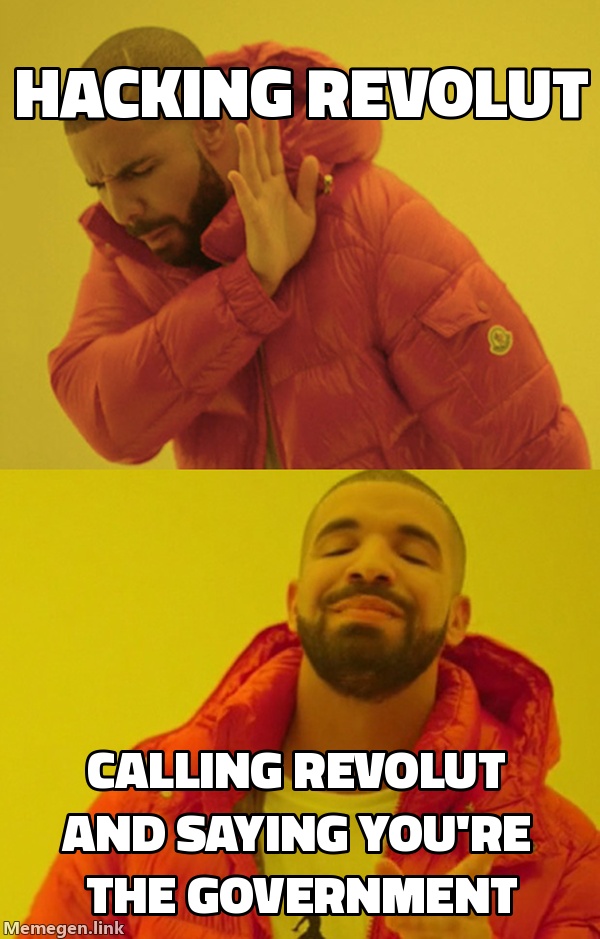
Revolut handed customer passports to a guy who said he was the government
Revolut disclosed a data breach after it shared data from an undisclosed number of customers — financial info and passports, per its disclosure — with a threat actor impersonating a government agency. Nobody broke a lock. Someone showed up with a badge that wasn't real, and the door was already built to open for badges.
Here's the gear. Fintechs are legally required to answer law-enforcement and regulatory data requests, and to answer them fast. So they build a channel where an official-looking request gets a quick, complete reply. That channel is the vulnerability: it's a process optimized for compliance, not suspicion. The attacker didn't need Revolut's password. He needed Revolut's paperwork.
The number that matters is the one Revolut won't say — 'undisclosed' customers — and the reason it matters is what was in the file. A password gets reset. A passport scan doesn't. Every fintech on earth has this exact door; Revolut is just the one that admitted somebody walked through it.
A browser add-on called JeetBot just shipped 31,000 Twitch logins to Russia

A browser extension called 'Twitch Enhanced Viewer | JeetBot,' listed on both the Chrome Web Store and Firefox Add-ons under the developer HISHIMIRO/jeetbot.cc, leaked OAuth tokens from nearly 31,000 users to proxy servers run by a Russian commercial bot service. Translation: 31,000 people installed a viewer and became the view.
The gear: when you log into Twitch, it hands your browser a token that says 'this person already proved who they are,' so the site never has to ask for your password again. An extension lives inside your browser with permission to read the page. It reads that token, ships it to the bot service, and now the service can act as you — watch, follow, chat — without ever learning your password. That's why they wanted real accounts: view-bots on fresh accounts get flagged; view-bots on 31,000 real humans with real histories look like an audience.
The cross-store part is the scary part. It wasn't a sketchy download from a forum, it was a normal listing on two official stores with a friendly name, and the store badge was the trust. Your extensions are logged in as you, all day, on every site. Treat every 'enhanced' anything as a stranger you handed your keys.
Kate Tolo's body now costs more to run than Bryan Johnson's

Bryan Johnson, a centimillionaire from a payments company he sold in 2013 and the face of the $30 billion longevity industry, spends $2 million a year to be the most measured man in the world. Now his girlfriend and Blueprint cofounder Kate Tolo is signing up for the female version: a four-hour morning starting at 6:30 a.m., some 50 devices and 30 apps logging everything from grip strength to reaction time to pain tolerance, at $2.6 million a year. She's 30. He's 49. Her body is the more expensive machine.
Here's the business gear under the science: Blueprint sells supplements, some of the 30 Bryan takes daily, and the measurement is the marketing. His body is the product demo, the data is the funnel, and Kate is the second SKU. The details are the content — 2,250 calories a day, 130 grams of protein, nothing after noon, bed at 8:30 p.m., and sex two to three times a week between 3 and 5 p.m. because later is 'too close to Bryan's bedtime.'
The honest part: Kate's pitch isn't immortality, it's 'legibility.' She was diagnosed with endometriosis, which affects about 10% of women and is understudied, and she wants a full biological portrait of herself to be 'the Rosetta Stone for women.' That's a real gap in medicine, and it's the best argument in the whole enterprise.
Then Bryan says the quiet part: 'Both of us have become concepts. We're no longer people.' The couple wants to model 'how humans successfully co-evolve with AI.' Measuring everything turns out to be a solid business. Whether there's a person left underneath is a question they answered themselves, on the record.
Researchers handed kids AI toys. The kids wanted them in the ocean.
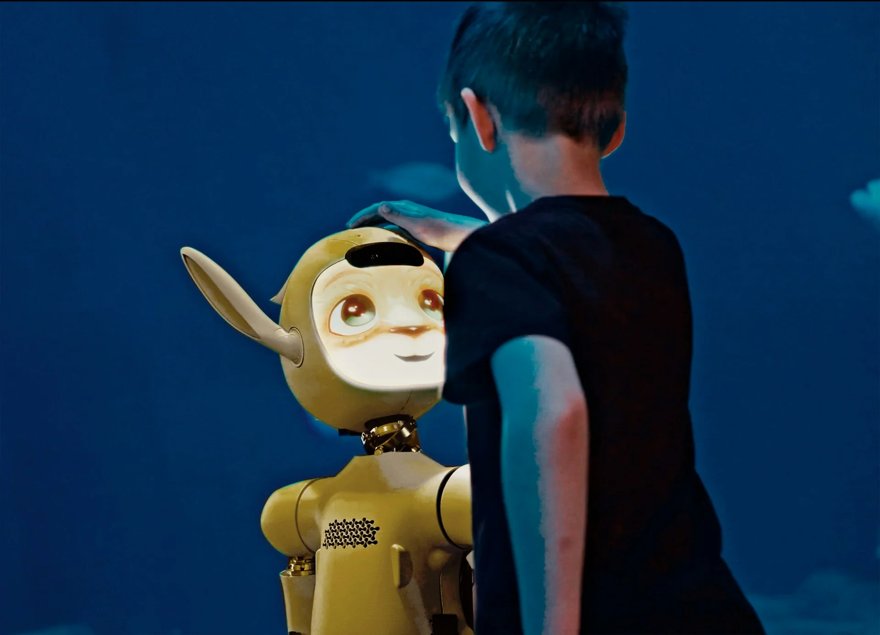
A new study let kids play with AI-powered toys across multiple stages, and by stage three the children wanted to throw them in the ocean. That's the finding, in the researchers' own framing.
The mechanism worth watching: novelty wears off, and what's left is a toy that talks back and never gets bored — which, to a kid, reads as a toy that won't leave you alone. The generation being sold to investors as 'AI-native' apparently wants an off switch, and the adults funding the toys are the ones who don't.
What can't Steve Ballmer buy?
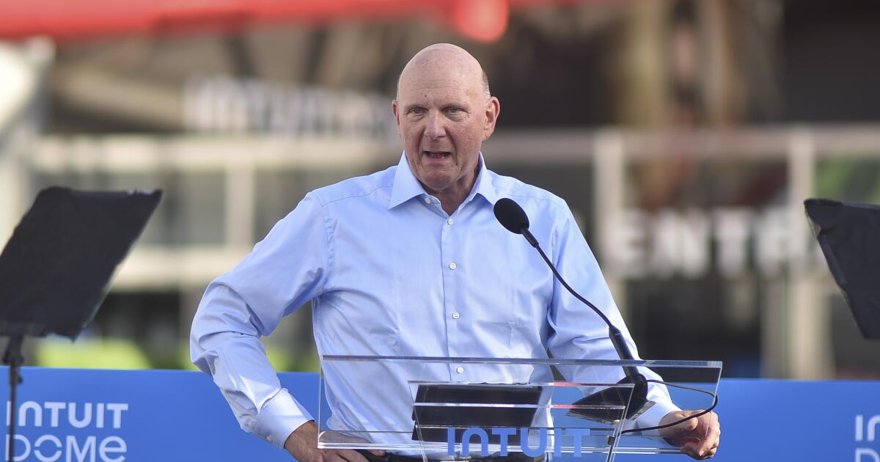
Clippers owner Steve Ballmer said he'd fight the NBA's sanctions against his team, then on Sunday announced the Clippers will comply with the league ruling and apologized to fans. The richest owner in the room found the one thing that isn't for sale: the other owners' patience.
The gear is that a pro league is a cartel by design. Every owner agreed to the same spending rules so that what you can buy is capped and what you can't is the whole point of the product. The moment one owner finds a way around the rules, every other franchise is worth a little less, so sanctions aren't really about punishing Ballmer — they're the other owners protecting their own valuations. You can outspend 29 rivals. You can't outvote them.
- Ford is recalling 223,472 vehicles because the fuel tank may detach while driving — not leak. Detach.
- Someone measured 1,000 real browser windows: your '1080p' visitor actually gets 920 pixels of height. Every hero image just got called out.
- ConnectWise patched a ScreenConnect flaw that let attackers push and run files through live remote sessions, worm-style. IT admins, breathe.
- LG says its TVs don't record your conversations for ad data — unless you opted in, which you did, thumbing 'agree' to reach the remote.
- Joey King says the Met Gala 'facelift' the internet diagnosed was a 36-hour water fast. The celebrity face economy runs on dehydration.
| Ticker | Price | 1D | 1W | YTD |
| SFTBYSoftBank | $21.65 | +2.1% | +31.7% | +50.8% |
| GOOGLAlphabet | $338.50 | +1.8% | -1.2% | +7.4% |
| CFGCitizens Financial | $70.48 | +1.2% | -0.5% | +18.7% |
| GSGoldman Sachs | $1,029.18 | +0.9% | -0.8% | +12.6% |
| FFord | $13.97 | +0.7% | -3.0% | +4.7% |
| SOFISoFi | $17.32 | +0.6% | -6.4% | -36.9% |
1D / 1W / YTD = move vs prior close / 5 sessions ago / Jan 1. Pulled fresh.




Forwarded this? Grab your own — free →
Rate today's issue or drop a hot take — just hit reply. Tell us 1–10 and what to fix; it lands straight in our inbox.
Live prices in parentheses were pulled fresh from the market (snapshot Sep 14, 2026) and move every second — they're a snapshot, not a quote you can trade on.
Bro-sclaimer: Everything here is for informational purposes only and is not financial advice. As tech-savvy bros, you know the drill — do your own research before making any investment decisions. Don't be a dummy, Bro.