The Morning Bro

Good Morning, Fully Caffeinated Friday Bro You made it to Friday, which means your coffee is legally allowed to taste better and nobody can make you open a spreadsheet after 3pm. Proud of you, genuinely. Let's get into it. ☕
- One 26-year-old, two AI tools, several banks, and one very unlocked door.
- Amazon built 1,000 satellites. Most of them are still on the ground.
- A newspaper exec defended a Palantir deal with a quote you can't print.
- Microsoft just got pulled out of the green card line.
One OpenAI revenue number just knocked over the entire AI trade
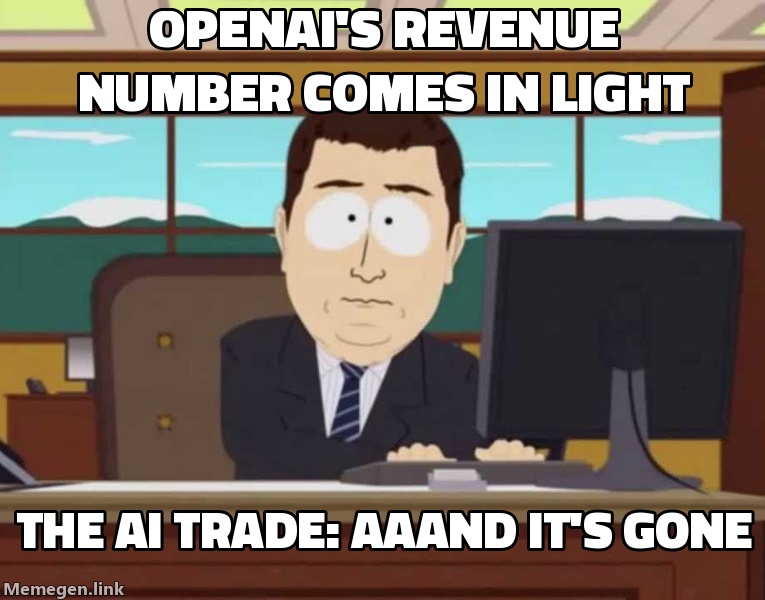
The AI trade took a hit Thursday after OpenAI's annualized revenue turned out to be short of what the company had previously signaled.
The gear: the AI rally is a stack. Chips, data centers and cloud bets only pay off if someone at the top is actually collecting the revenue. OpenAI is the poster child for that someone. So when its number lands below its own signal, the whole stack gets repriced at once, including the parts that never touched the miss.
Microsoft just got suspended from the green card line
VP JD Vance announced Thursday that Microsoft (now $522.61, -1.4% 1D) is suspended from applying for permanent residency for workers on H-1B visas, accusing the company of abusing the system. Adobe (now $241.05, +3.6% 1D) is barred from the same program.
The gear: an H-1B lets a high-skilled foreign worker hold a US job while they apply for a green card and wait on it. That application runs through the employer. Suspend the employer, and the worker's path to residency stalls with it, whatever the worker did or didn't do.
Why it matters: The visa fight used to be about one set of rules for everyone. This is a company-by-company switch, and two of the biggest software names in the country got flipped on the same day. If you're on an H-1B at a big tech company, your green card now depends partly on how your employer stands in Washington.
A 26-year-old hacked banks with AI, then left his homework on the open internet

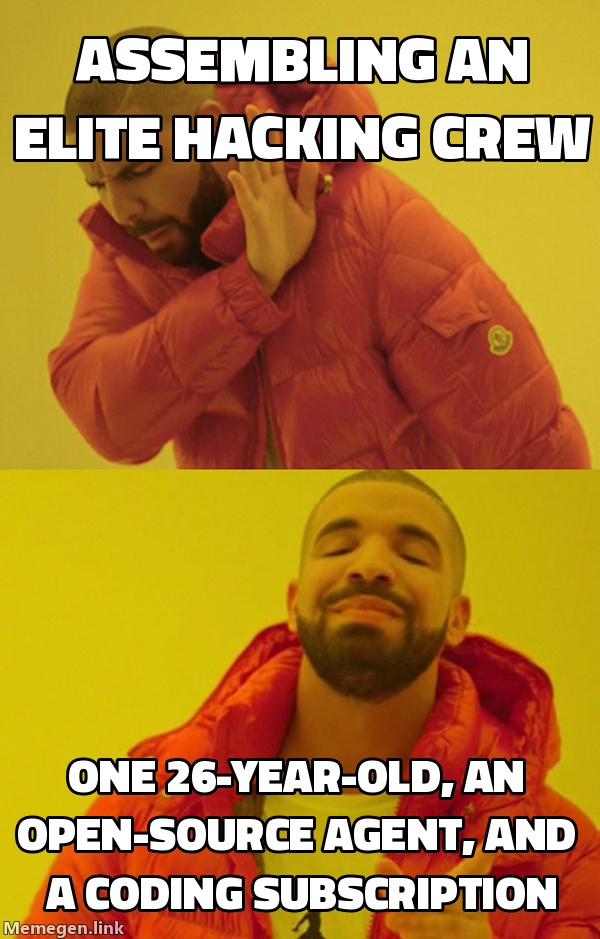
The one-person AI hacking crew is officially real, and according to CrowdStrike (now $263.01, -0.9% 1D), still messy. A likely China-based 26-year-old breached South Korean financial firms using a Chinese AI pentest agent plus Anthropic's Claude Code, then left his working notes on servers anyone could read.
The operator: CrowdStrike's report, published Wednesday, covers a campaign against several South Korean financial organizations that ran from late September to early October 2026 and ended with stolen data. It hasn't tied the attacker to a known group, but it has moderate confidence he's Chinese-speaking and financially motivated, based on his tools and his Chinese-language prompts.
ARTEX: The gear: ARTEX is a recently released open-source Chinese tool that lets AI agents run penetration tests on their own. That's the probing a security team normally does by hand. Pair it with a large language model and a solo operator gets a tireless assistant for the grunt work of breaking in.
The fumble: Open directories on his own servers exposed his Claude Code session histories, ARTEX config files, and Claude memory files. Researchers got to watch the whole operation prompt by prompt, which almost never happens. He automated the break-in and forgot to lock his own front door.
Zoom out: It took one 26-year-old, a free open-source agent, and a coding assistant to hit multiple banks in a few weeks. The bar for a bank-hacking operation is now about a laptop and a subscription. If your bank's defenders aren't using the same tools, they're bringing a clipboard to a robot fight.
Amazon built 1,000 satellites. 396 made it to space.
The space internet war just came down to the ground. SpaceX bought old Sprint airwaves to become America's fourth cellular carrier, while Amazon (now $254.06, -2.2% 1D) is learning that satellites sitting in a warehouse don't count.
SpaceX: SpaceX bought Grain Management's 800 MHz terrestrial spectrum, the airwaves that used to trade as Sprint, for Starlink Mobile. The gear: satellite signals struggle to get inside buildings, and this ground-based spectrum can get through walls. Starlink goes from a dish on your roof to bars on your phone in the kitchen.
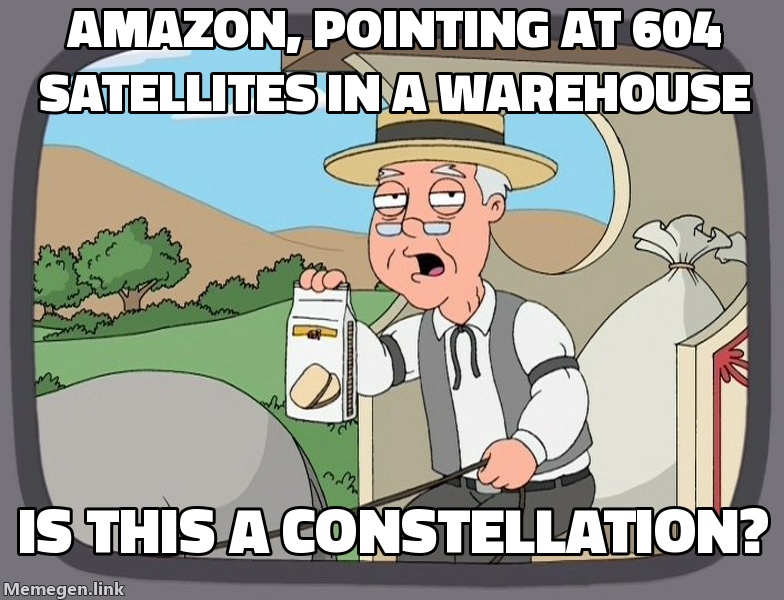
Amazon: Amazon just built its 1,000th broadband satellite and says service is weeks away, after ramping production from 27 satellites in six months to 27 a week. The catch: only 396 are in orbit. That shortfall already cost Amazon spectrum priority in July, and the FCC will only hand it back early if Amazon proves its case.
Zoom out: Amazon has 604 satellites built and not flying. That's more than its entire constellation in orbit. SpaceX, meanwhile, is past the space part and shopping for ground airwaves. Your next phone bill could have a rocket company's name on it.
‘We're in their shit. They're not in ours,’ says America's biggest newspaper chain

USA Today Co., the country's largest newspaper chain, is defending its Palantir (now $198.78, +2.4% 1D) deal. One exec explained how little access Palantir has with: ‘We're in their shit. They're not in ours.’ The pitch: Palantir's software stitches the company's existing data together so it can be acted on in real time.
Here's how it works, per USA Today Media president Kristin Roberts. You read a sports story and want the team's jersey. Reporters used to dig up the affiliate link and paste it in by hand. Now that's automated, and it's ‘a Palantir project.’ CEO Mike Reed has called the whole thing a shift to becoming ‘an intelligence organization’ that capitalizes on ‘the data we have on consumers.’
The staff isn't buying it. In August, more than 800 employees from 31 unionized newsrooms asked the company to dissolve the partnership. The execs' response was to accuse the NewsGuild of saying things that are ‘factually untrue.’ Roberts insists Palantir only gets ‘highly controlled data’ and can't see reporters' notes. That's reassuring, except the CEO's own pitch is the data on you, the reader.
Did anyone ask for a Matchbox movie?

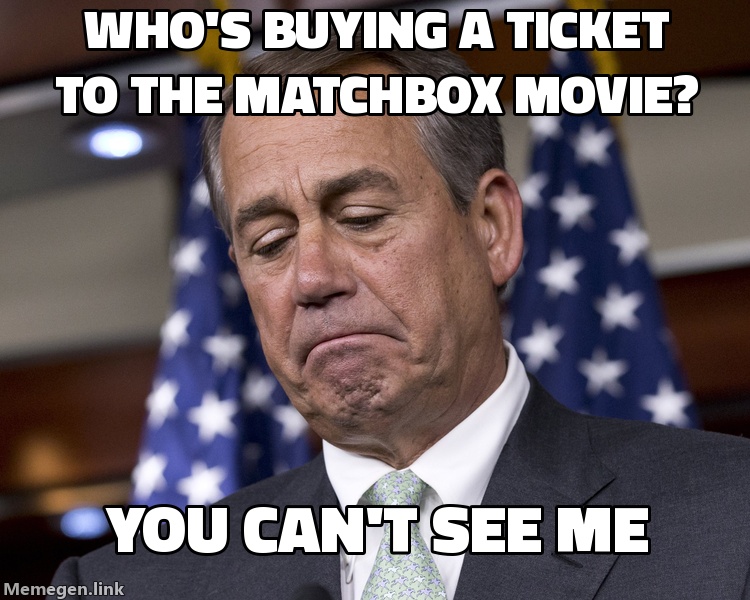
Paramount has finished swallowing Warner Bros., and the first critical verdict on what comes next is a Matchbox movie starring John Cena and Jessica Biel, reviewed as ‘a soulless and synthetic slab of corporate product.’
The gear: merge two studios into one Skydance-owned machine and you get a promise of 30-plus theatrical releases a year. That's a lot of slots to fill, and the safest filler is brand-name stuff a corporation already owns, like a toy car. The studios behind Casablanca, The Exorcist, 2001, The Godfather and Chinatown now share a roof with the toy-car cinematic universe.
Why it matters: Two classic studios becoming one means one fewer buyer for an original script. Expect more of your Friday-night movie to be something you already own as a toy.
The Eagles are flying overseas mid-spiral
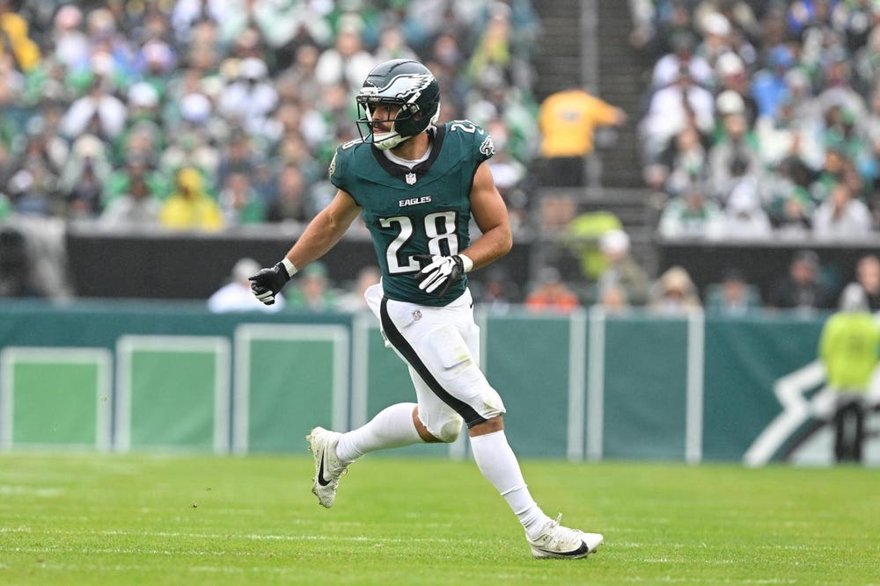
The downward-spiraling Eagles are headed abroad for an NFL Week 5 International Series game against the Jaguars, and the player-prop guides are already out.
That's honestly the whole story. There's no deal number, no attendance figure, no revenue. A struggling team gets a passport stamp and the betting content writes itself.
- A former HSBC banker dodged $7,800 in train fares and got banned from finance and the railway. Pricey shortcut.
- Microsoft's 13-million-follower X account got hijacked to shill a Clippy crypto coin. It looks like you're trying to get rugged.
- The WTO says AI spending more than offset the trade drag from war in the Middle East. GPUs are load-bearing now.
- Nasdaq Ventures invested in One Trading to explore 24/7 trading in Europe. Markets want your weekends too.
- Microsoft 365 Family subscribers can finally share Copilot. Until now, only one person per family got the AI brain.
| Ticker | Price | 1D | 1W | YTD |
| PSKYParamount Skydance | $9.28 | +4.4% | -1.1% | +16.7% |
| ADBEAdobe | $241.05 | +3.6% | -0.1% | -27.7% |
| PLTRPalantir | $198.78 | +2.4% | +4.6% | +18.4% |
| AMZNAmazon | $254.06 | -2.2% | +2.4% | +12.2% |
| MSFTMicrosoft | $522.61 | -1.4% | +1.9% | +10.5% |
| HSBCHSBC | $92.61 | -1.2% | -3.4% | +15.1% |
| CRWDCrowdStrike | $263.01 | -0.9% | -1.2% | +131.9% |
| GOOGLGoogle | $348.29 | -0.6% | +3.0% | +10.5% |
| NDAQNasdaq | $92.37 | +0.5% | +0.8% | -4.4% |
1D / 1W / YTD = move vs prior close / 5 sessions ago / Jan 1. Pulled fresh.

Forwarded this? Grab your own — free →
Rate today's issue or drop a hot take — just hit reply. Tell us 1–10 and what to fix; it lands straight in our inbox.
Live prices in parentheses were pulled fresh from the market (snapshot Oct 9, 2026) and move every second — they're a snapshot, not a quote you can trade on.
Bro-sclaimer: Everything here is for informational purposes only and is not financial advice. As tech-savvy bros, you know the drill — do your own research before making any investment decisions. Don't be a dummy, Bro.