The Morning Bro

Good Morning, Wealthy & Well-Rested Bro It's Friday, the coffee's hot, and you survived another week of pretending to read every email before replying 'sounds good.' Pour the second cup — you earned the weekend back the moment your alarm didn't go off at 4:55. Let's get into it. ☕
- Bernie and Trump want the exact same thing. Be very afraid.
- SpaceX IPO buyers are already in the red.
- The AI race might hinge on a metal you can't pronounce.
- FIFA figured out how to keep $8.9B and hand you the bill.
Bernie, Trump, and OpenAI all want Uncle Sam to own a piece of AI

Here's the gear: instead of taxing AI profits later, the idea is for the U.S. government to take an actual equity stake in AI companies now — so when the robots start printing money, taxpayers own shares and collect the dividend like any other investor.
Bernie Sanders is pitching a $1,000 annual payout to every American funded by public ownership of AI. The plot twist: President Trump and OpenAI have floated versions of the same thing — government stakes in AI firms to spread the future windfall around.
Zoom out: When Bernie Sanders and Donald Trump independently land on the same policy, that's not a coincidence, that's a tell — everybody can see the AI money pile coming and is racing to plant a flag in it before the rest of us notice.
The average SpaceX buyer is already nearly underwater

SpaceX went public, and here's the math that matters: the volume-weighted average price — basically what the typical buyer paid — sits at just under $180. Two days later the stock fell as much as 7% to $178, meaning the average person who bought in is now staring at red.
That's the catch with a hype IPO — the 'get in early' crowd already got in, at $180, and the only direction left from peak excitement is down. If your index fund grabbed shares this week, congrats: you own a sliver of Mars and you're already slightly poorer for it.
The AI race might hinge on a metal you've never heard of
Everyone obsesses over GPU shortages, but the actual bottleneck is sneakier: the gear and raw materials that let those chips talk to each other. Two stories this week show where the real chokepoints are — and neither one is a graphics card.
ASML: The U.S. claims ASML (now $1,929.68, +3.3% 1D)'s most advanced chipmaking tool may have ended up in China — the kind of machine that makes the most cutting-edge chips possible. ASML says no chance, and the commercial logic backs them: torching your export license to arm one customer is a great way to lose every other one.
Indium phosphide: Meanwhile China tightened export checks on indium phosphide — a compound most people couldn't spell, but it's essential to the high-speed optical chips that move data around inside AI data centers. Throttle the supply and you slow the very buildout everyone's pouring billions into.
Zoom out: The AI war isn't being fought over who has the most chips — it's being fought over who controls the obscure machine that prints them and the obscure metal that wires them together. Whoever owns the chokepoint owns the leverage.
Thiel's society spent 20 years hiding its members. A coding flaw blew it in a day
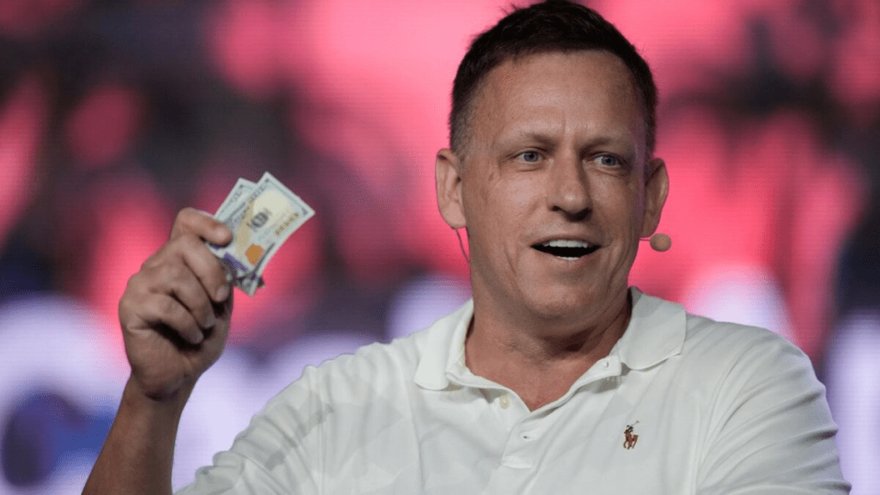
Dialog, a private invite-only society Peter Thiel cofounded in 2006, has refused to name a single member for two decades. Then a hacktivist viewed the page source of dialog.org and found an open directory just sitting there in the code — visible to anyone who right-clicked. Login tokens, political profiles, even dating data, all exposed.
WIRED confirmed the registration list for the August 12-16 retreat near Dublin: 222 registrants, 87 of them first-timers. The roster reads like a regulatory conflict-of-interest chart — Treasury Secretary Scott Bessent, Senator Ted Cruz, Palantir (now $128.47, -1.6% 1D)'s Joe Lonsdale, plus Marc Andreessen and Jim Breyer.
The part that writes itself: The 2026 agenda includes sessions titled 'Navigating WWIII,' 'Build-a-Cult,' and — genuinely — 'How's Your Sex Life?' A society this paranoid about secrecy, undone not by a spy but by the world's oldest trick: forgetting to lock the front door.
What do a Brunson look-alike and a dancing robot have in common?

That 'organic' viral Knicks moment everyone reposted? It was bought. Polymarket, a prediction market company, ran a Jalen Brunson look-alike contest in Washington Square Park on Wednesday, hosted by content creator Jake Epstein — and the catchphrase and the dancing robot outside Madison Square Garden were part of the same package.
Here's the playbook: instead of buying a banner ad nobody clicks, you manufacture a 'spontaneous' moment fun enough that people share it for free — and the brand rides shotgun on every repost. You didn't stumble onto a wholesome NYC bit. You watched an ad and called it content.
Mars is not a backup planet
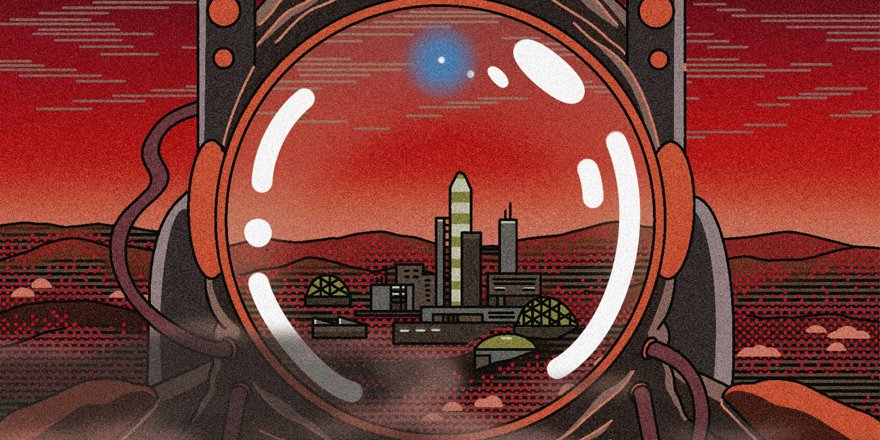
The whole 'colonize Mars' pitch rests on one idea: Mars as a 'lifeboat' — an insurance policy in case an asteroid or our own stupidity triggers Earth's sixth great extinction. The flaw in the logic is brutal: even a wrecked, post-asteroid Earth would still have air, water, and a breathable atmosphere. Mars has none of those.
The British Interplanetary Society — the world's oldest space advocacy group, founded in 1933 — has been dreaming about this for over 90 years, and we still haven't put a single human there. The honest version of the pitch came from Jeff Bezos back in 2016: we should go to Mars 'because it's cool.'
Which is fine! 'Because it's cool' is a great reason to fund science. It is a terrible reason to sell people on a planet where stepping outside without a suit kills you in under two minutes as the responsible adult option.
FIFA will pocket $8.9B while host cities eat a $250M shortfall

FIFA quietly rewrote the rules. For most of World Cup history, a local committee absorbed the costs AND shared the upside. For 2026, FIFA runs the tournament itself — keeping essentially all the revenue (media, sponsorship, ticketing, hospitality, merch) while assigning the costs (security, transport, stadium retrofits) to the cities. It's a franchise model where the franchisees pay and the franchisor collects.
The result: FIFA collects an estimated $8.9 billion, while the 11 U.S. host cities face a collective shortfall of upwards of $250 million. Gianni Infantino promised to quadruple FIFA's income when he ran in 2016 — he's calling the 48-team, 104-match event '104 Super Bowls,' and he's on pace to deliver.
The squeeze: For the first time, FIFA is using dynamic pricing — tickets float with demand like airline seats, from a $60 floor to $7,875 for a Category 1 final seat. An economist nailed the why: FIFA won't be back in the U.S. for 30 or 40 years, so there's no repeat business to protect. Anger today, money today.
- Meta's CTO admits employee morale is extremely low — and the fix is, genuinely, better snack areas. Crisis averted.
- Malware authors are now stuffing fake nuke and bioweapon text into their code to scare AI scanners off the analysis.
- Apple patched a Beats Studio Buds flaw (CVSS 8.8) that let nearby hackers turn your earbuds into a hot mic.
- Google told a researcher 'Nice catch!' — then denied the bounty and left the bug unfixed. 'Working as intended.'
- Tesla sales are rebounding in Europe even as buyers say they can't stand Musk. The cognitive-dissonance trade.
| Ticker | Price | 1D | 1W | YTD |
| ASMLASML | $1,929.68 | +3.3% | +1.6% | +65.8% |
| METAMeta | $577.22 | +1.7% | +1.6% | -11.2% |
| PLTRPalantir | $128.47 | -1.6% | -2.0% | -23.5% |
| GOOGLAlphabet | $368.03 | +1.2% | +2.9% | +16.8% |
| TSLATesla | $400.49 | +1.0% | +0.3% | -8.6% |
| AAPLApple | $298.01 | +0.7% | +0.8% | +10.0% |
1D / 1W / YTD = move vs prior close / 5 sessions ago / Jan 1. Pulled fresh.
 | fareed 🏴 @it_is_fareed | 𝕏 |

 | Josh Johnson @secondfret | 𝕏 |


Forwarded this? Grab your own — free →
Rate today's issue or drop a hot take — just hit reply. Tell us 1–10 and what to fix; it lands straight in our inbox.
Live prices in parentheses were pulled fresh from the market (snapshot Jun 19, 2026) and move every second — they're a snapshot, not a quote you can trade on.
Bro-sclaimer: Everything here is for informational purposes only and is not financial advice. As tech-savvy bros, you know the drill — do your own research before making any investment decisions. Don't be a dummy, Bro.